
If you are deciding between dental crowns and dental veneers for front teeth, the main question is how much of the tooth needs treatment. Veneers are usually better for healthy front teeth that need cosmetic improvement, while crowns are usually better for front teeth that are weakened, broken, heavily filled, or worn down. Neither option is automatically better. The right choice depends on enamel, bite, gum health, tooth position, existing damage, and the smile result you want. If you're weighing crowns versus veneers to improve the appearance or strength of your front teeth, cosmetic dentistry can clarify which conservative option meets both form and function. Dr. Scott Adishian in Arcadia, CA provides advanced restorative and aesthetic care that helps preserve tooth structure while achieving a natural smile. A veneer is a thin shell, usually porcelain or ceramic, bonded mainly to the front of a tooth. It can improve color, shape, length, and proportions while often preserving more natural tooth structure than a crown. A crown covers most or all of the visible tooth above the gumline. Crowns provide broader protection, but they usually require more tooth reduction and should not be chosen when a more conservative option can predictably work. Consideration Veneer Crown Main purpose Cosmetic improvement Restoration and protection Tooth coverage Primarily the front surface Most or all visible surfaces Typical tooth preparation Usually less Usually more Best starting condition Strong tooth with adequate enamel Weakened, damaged, or heavily restored tooth Common uses Discoloration, minor chips, shape or spacing concerns Fractured teeth, extensive fillings, severe wear, or major structural loss Main limitation Does not reinforce a significantly weakened tooth Removes more natural tooth structure Dental veneers may be the better choice when front teeth are healthy but have stains, uneven edges, small chips, minor gaps, or proportions that affect the smile. They are often used when whitening or bonding will not create the desired result. Porcelain veneers bond best to enamel, the strong outer layer of the tooth. When preparation stays mostly in enamel, bonding is often more predictable and sensitivity may be lower, although some cases require deeper preparation because of tooth position, existing fillings, or the amount of color change needed. Veneers also have limits. They are not meant to stabilize teeth with extensive decay, large fillings, deep cracks, or major structural loss, and they cannot solve every bite or alignment problem without creating bulky contours. Dental crowns are often the safer choice when a front tooth has lost substantial structure from trauma, decay, wear, or previous dental work. They may also be recommended when a large restoration is failing or when a tooth needs more complete protection. A front tooth that has had root canal treatment does not always need a crown. The decision depends on how much healthy tooth remains, whether the tooth is cracked, how large the access opening is, and how much biting force that tooth receives. Crowns can improve color and shape while rebuilding strength and function. If the tooth is otherwise healthy and the concern is mainly cosmetic, however, the added tooth reduction may not be the most conservative choice. Front teeth do more than show when you smile. They also guide biting and jaw movement, so an edge-to-edge bite, deep overbite, or habits like grinding teeth can raise the risk of chipping, debonding, or fracture with either treatment. Teeth that are crowded, rotated, or pushed forward may benefit from orthodontic treatment first. Moving teeth into a better position can help preserve enamel and allow a more natural final shape. Active gum disease, untreated cavities, and unstable bite problems should usually be treated before veneers or crowns. A nightguard may be recommended for clenching or grinding, but it reduces risk rather than eliminating it. Both crowns and veneers can look natural when the shape, translucency, texture, and shade are planned carefully. Gum position and tooth preparation also matter because visible edges, mismatched color, or bulky contours can make even high-quality dentistry look unnatural. These restorations can last many years, but neither is permanent. Longevity depends on the material, bite forces, bonding conditions, oral hygiene, gum changes, habits, decay risk, and the quality of ongoing care, which is why the lifespan of a crown varies from one patient to another. The ceramic itself does not decay, but the tooth around the margins still can. Over time, a restoration may need repair or replacement because of chipping, loosening, recurrent decay, gum recession, wear, or changing cosmetic goals. Planning often includes photos, X-rays when needed, a bite evaluation, shade selection, and digital or physical models. In some cases, a diagnostic preview or temporary mock-up helps you assess length and shape before any irreversible treatment begins. After preparation, the dentist takes a scan or impression and may place a temporary restoration while the final ceramic is made. At the delivery visit, fit, bite, shade, and overall appearance are checked before the restoration is bonded or cemented. Some gum tenderness or temperature sensitivity can happen after treatment and often improves. Contact the dentist promptly for worsening pain, swelling, fever, drainage, a loose crown, a bite that still feels high, or a tooth that fractures; swelling that affects breathing or swallowing needs urgent medical care. The best option is usually the most conservative treatment that can reliably meet both the functional and cosmetic goals. Depending on the tooth, that may be whitening, bonding, orthodontics, enamel reshaping, a veneer, a crown, or a combination of treatments. A provider experienced in cosmetic dentistry can evaluate enamel, tooth strength, gum symmetry, bite forces, and realistic shade changes. For complex damage, heavy wear, or multiple front teeth, a prosthodontist may be especially helpful because of advanced training in restoring and replacing teeth. A careful exam and treatment preview can show what should be restored, what can still be preserved, and which result is maintainable over time. That kind of planning helps protect healthy tooth structure while supporting a natural-looking smile. A focused consultation will compare veneer and crown options, review bite and enamel considerations, and outline a predictable plan to meet your aesthetic and functional goals. Contact Dr. Scott Adishian by calling (626) 796-3700 for cosmetic dentistry in Arcadia and nearby La Quinta to arrange a consultation. Usually, yes. Veneers often require less tooth reduction because they cover mainly the front surface, but preparation varies, and so-called no-prep veneers are appropriate only in selected cases. Yes. A weakened tooth may need a crown while neighboring healthy teeth receive veneers, as long as the dentist and dental laboratory can coordinate color, contour, and translucency. Porcelain and many dental ceramics resist staining better than natural enamel or composite resin. Their shade does not respond to whitening, though surface buildup or color changes in nearby teeth can create a mismatch over time. Either can look natural when properly planned and fabricated. The result depends more on preparation, material selection, laboratory work, gum health, and how the restoration blends with nearby teeth than on whether it is called a crown or a veneer. Sometimes. If the tooth later loses more structure, a crown may become the better option, but that requires a clinical evaluation. The reverse is generally not possible because crown preparation removes more tooth structure than veneer preparation.Crowns vs. Veneers for Front Teeth at a Glance
When Veneers Are Better Than Crowns for Front Teeth
When Crowns Are Better Than Veneers for Front Teeth
Crowns vs. Veneers for Front Teeth: How Bite and Habits Change the Decision
Crowns vs. Veneers for Front Teeth: Appearance, Function, and Longevity
What the Treatment Process Usually Involves
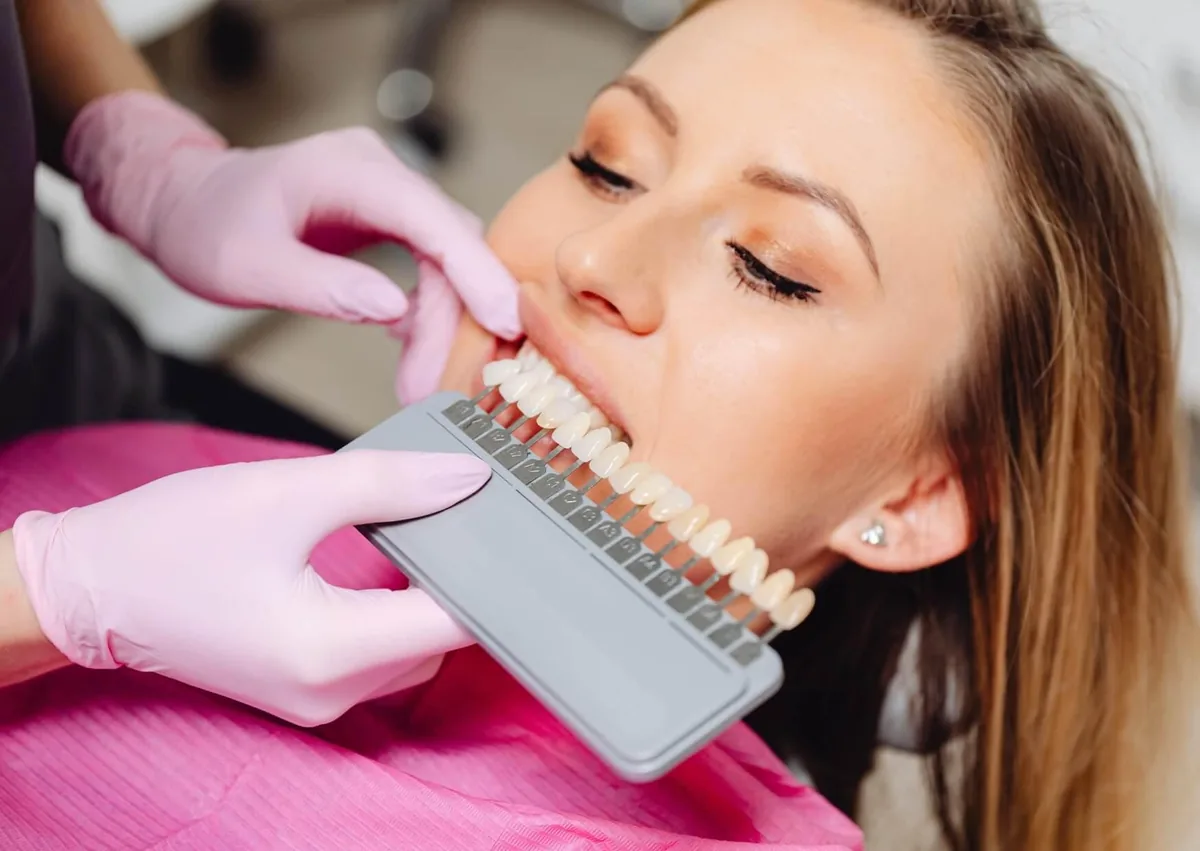
How to Choose Between Crowns and Veneers for Front Teeth
FAQs
Are veneers less invasive than crowns?
Can crowns and veneers be used together on front teeth?
Do crowns or veneers stain?
Which looks more natural on a front tooth?
Can a veneer be replaced with a crown later?
Related Articles